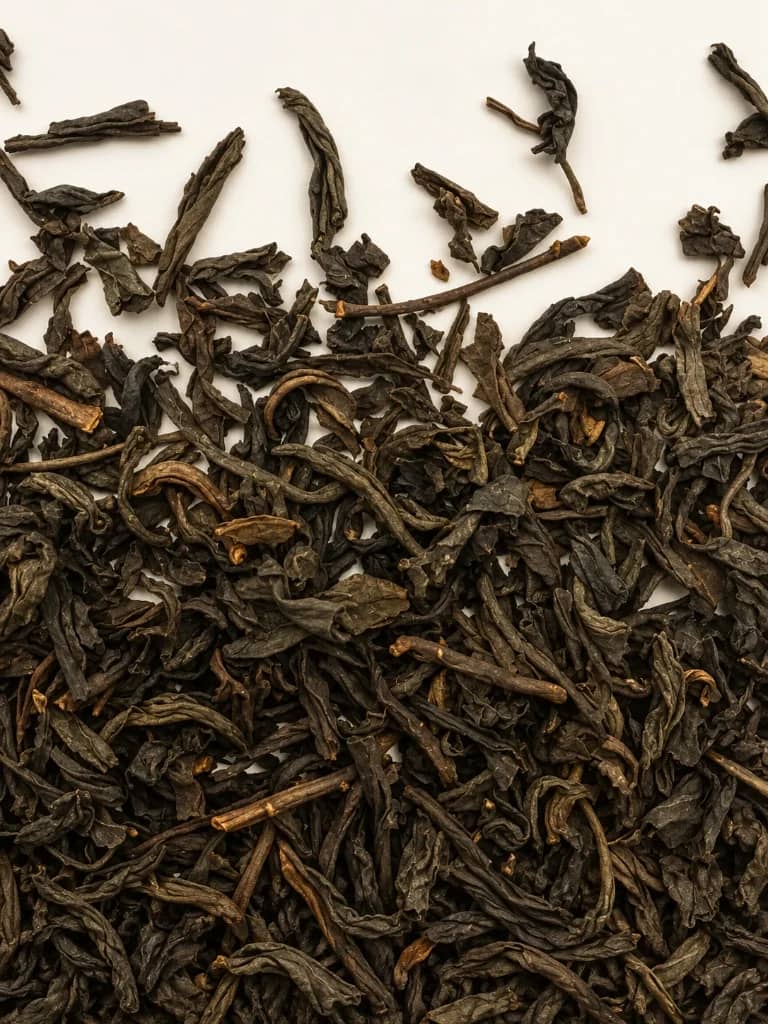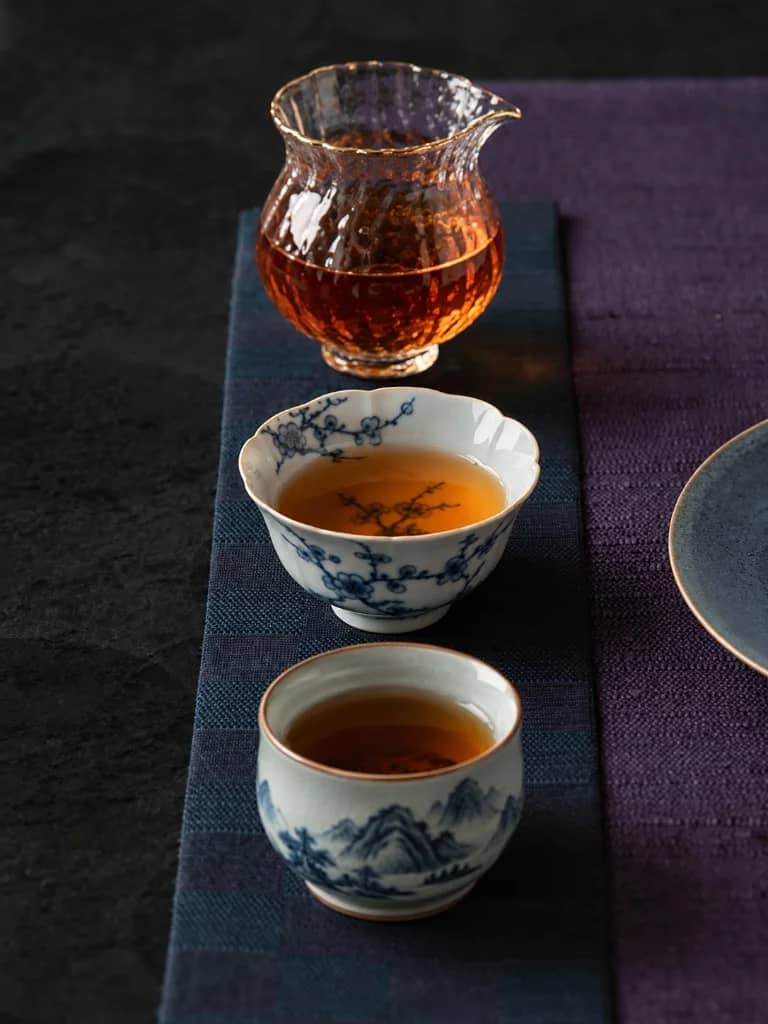
RED · 100 g
Zheng Shan Xiao Zhong / Lapsang Souchong
A smoky red tea with notes of dried longan, dark malt and pine resin, followed by a sweet finish.
€26
Tasting qualities
Pine smoke / Dried longan / Dark malt / Warm amber resin
Origin
Tongmu Village, Wuyi, Fujian, China
- Farmer / producer
- To be announced.
- Garden
- To be announced.
- Location
- To be announced.
- Altitude
- To be announced.
Harvest & processing
- Harvest
- To be announced.
- Processing
- To be announced.
- Lot
- To be announced.
Source story
To be announced.
A starting point to explore with your own water. Adjust the recipe to the cup you enjoy.
Gongfu · repeated infusions
Short infusions
Suggested starting point
- Tea
- 5 g
- Water
- 100 ml
- Temperature
- 95°C
- Time
- 10–20 sec
Infuse in a gaiwan or small teapot, pour out fully, then repeat with fresh water.
Everyday · grandpa style
Leaves in the cup
Suggested starting point
- Tea
- 2 g
- Water
- 300 ml
- Temperature
- 95°C
- Time
- Start tasting after 2 min
Leave the leaves in a roomy cup. Sip when comfortable and top up when roughly half the water remains.
Water we used
To be announced.
Our approach to brewing
We invite you to find your own way of brewing, guided by your water and your intention.
Compare the smoke with the sweetness underneath it. If smoke dominates the whole cup, reduce the leaf or shorten the pour; if the cup is thin, add a little time. Let the cup cool enough to distinguish aroma from body.
Our exploration
Find a steady base.
Try using the contrast between a strong aroma and a quieter finish to return to simple physical contact: feet, seat and breath. Let steadiness be something you notice rather than produce.
Focus · Grounding and simplicity
| Asana | Tadasana — feel the whole sole of each foot. |
|---|---|
| Dantian | Lower dantian — return attention below the navel. |
| Chakra | Muladhara — notice the base of the body and its support. |
| Meridian | Kidney channel — begin with attention at the soles and follow the familiar pathway. |
Community exploration
What did you notice while drinking Zheng Shan Xiao Zhong / Lapsang Souchong or afterwards?
Share your exploration
Tea in the historical record.
Historical descriptions reflect the views of their time.
Tea in Buddhist and Taoist practice
Wakefulness & bodily lightness
Tea broadly · Tang accounts collected by Feng Yan and Lu Yu
Feng Yan records permission to drink tea among Chan students at Lingyan monastery whose training involved staying awake.[1] Lu Yu preserves a passage attributed to Tao Hongjing associating bitter tea with bodily lightness and naming immortal figures as drinkers.[2]
References
- Fengshi Wenjian Ji Jiaozhu (封氏聞見記校注)ISBN 9787101047226
- The Classic of TeaISBN 9780316534505